
Membrane
60 or 90 Mil EPDM
Rubber Membrane
Kearney EPDM Roofing Contractor
EPDM Rubber That Protects Low-Slope Decks Through Freeze and Thaw
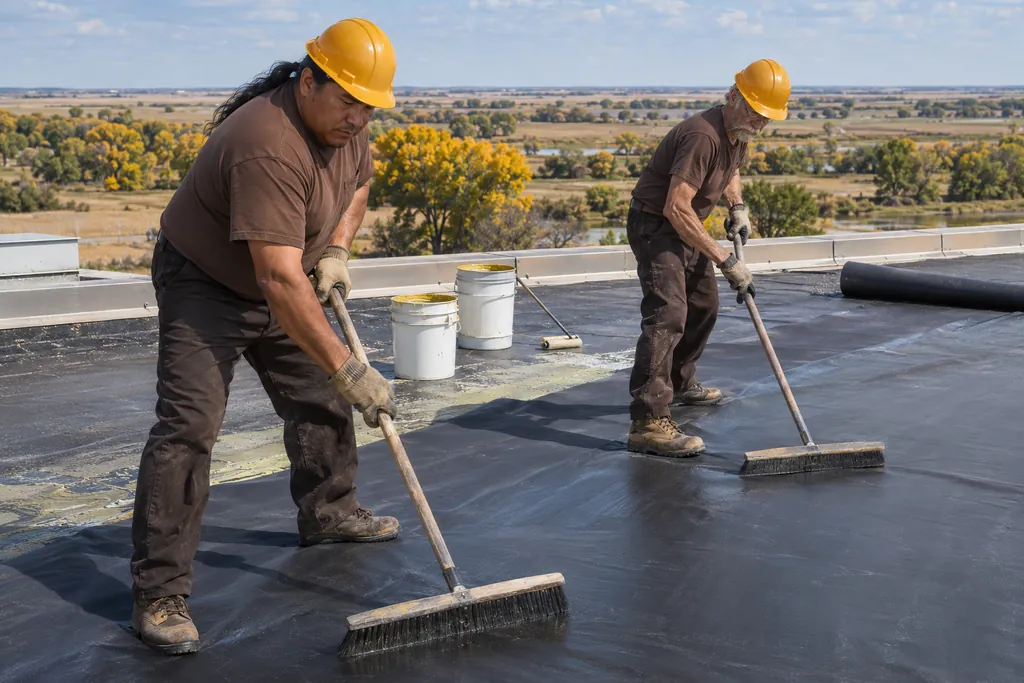
As a Kearney EPDM roofing contractor, we install black rubber membrane on low-slope commercial roofs. Laps are primed and taped, and every curb gets new flashing.
Attachment
Adhered or Ballasted
- Flexible in deep cold
- Primed and taped laps
- Adhered, fastened, or ballasted
- Core cuts before any bid
EPDM Roofing for Kearney Buildings: Where It Fits
Kearney EPDM roofing works best on plain low-slope roofs with few penetrations. Compare it with the other two systems before deciding.
What We Install
EPDM
TPO
Metal Panels
EPDM Roofing Problems We Find on Kearney Roofs
Older rubber roofs give warning signs inside the building first. These pairs link each sign to the EPDM detail behind it.
- Inside The Building
Drips Along a Straight Line
A row of drips running straight across the ceiling usually sits under a lap. Older EPDM laps were glued with lap cement that dries out and lets go.
On The RoofLap Cement Letting Go
We open suspect laps, clean back to bare rubber, prime, and apply new seam tape with a cover strip, replacing the old cement method along the full run.
- Inside The Building
Daylight at the Top of a Wall
Daylight or water at the top of an interior wall points to the roof edge, where shrinking rubber has pulled away from the parapet.
On The RoofMembrane Pulling at Parapets
EPDM shrinks with age and pulls on its edge flashing, a condition roofers call bridging. We release the tension, add membrane, and refasten the termination bar.
- Inside The Building
New Leaks After a Hailstorm
Leaks that start right after a storm with large hail can come from punctures in the rubber, even when the roof looks fine from the hatch.
On The RoofPunctures and Torn Flashing
Hail, dropped tools, and ice can puncture rubber. We find each hole by hand and seal it with primer and a peel-and-stick patch, or replace the sheet where punctures cluster.
Kearney EPDM Roofing Options by Attachment
EPDM goes down three ways, plus a recover. The deck, the wind exposure, and the structure decide which we use.
| Option | How It Holds | Deck Load | Fits |
|---|---|---|---|
| Fully Adhered | Glued to cover board with adhesive | Light | Windy sites, decks with no spare load capacity |
| Mechanically Fastened | Plates and screws in the laps | Light | Steel decks during cold months |
| Ballasted | River stone over a loose sheet | Heavy | Structures rated for stone, sheltered from high wind |
| EPDM Recover | New sheet over cover board | Light | Dry single-layer roofs where code allows it |
What EPDM Roofing Does for Kearney Building Owners
Rubber roofing helps each person tied to the building in a different way.
Owner
- Rubber stays flexible below freezing, so laps flex with the deck instead of cracking.
- An adhered sheet adds no stone load to an older structure.
- Punctures found years later are patched with primer, tape, and the same rubber.
Facility Manager
- Taped laps and new curb flashings cut repeat calls to the same drip.
- Black membrane warms in the sun and sheds light snow from the field.
- Leak tracing is easier on an adhered sheet because water has little room to travel under it.
Tenants And Staff
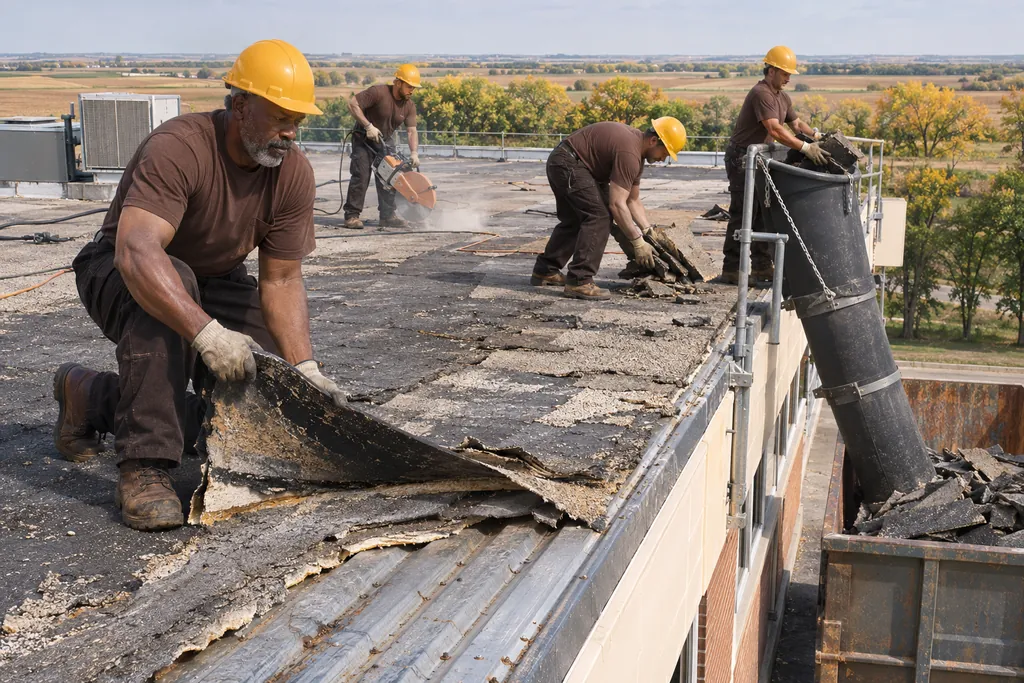
- Work over each bay is announced ahead, with the noisy tear-off done first.
- Adhesive work near air intakes is timed with the maintenance staff.
- Interior tarps go up under any open section where stock or desks sit.
Rubber Roof Pulling Away From the Walls?
Call and describe where water or daylight shows inside. We check the EPDM edges, laps, and flashings and tell you if a repair will hold.
EPDM Roofing Work Order for Kearney Roofs
How an EPDM job moves from the first roof walk to the final flashing.
On The Roof
Around The Building
- On The Roof
Inspect Your Roof
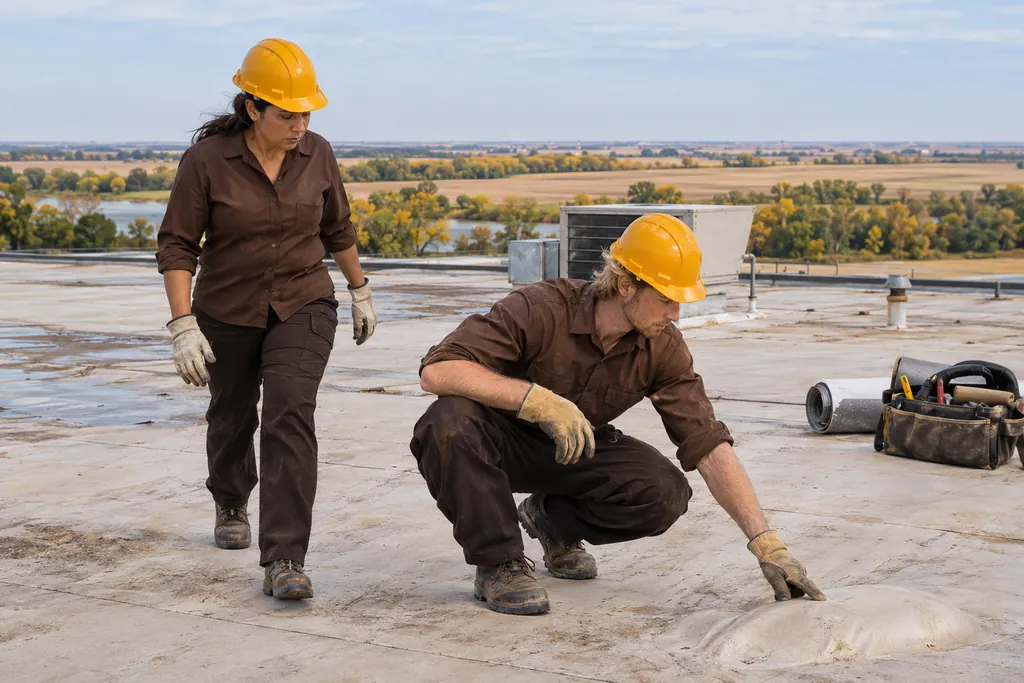
We core the roof to read the insulation, pull a few laps to test the old seams, and check how much stone or how many layers the deck carries.
- Around The Building
Plan Air Intakes and Access
Adhesive work near rooftop air intakes is timed with your maintenance staff. Lift and dumpster spots are marked so doors and loading docks stay clear.
- On The Roof
EPDM Roof Replacement Section by Section
Old layers come off one area at a time. Insulation and cover board go down, the rubber is adhered or fastened, and laps are primed and taped before the crew moves on.
- Around The Building
Walk the Laps With You
Together we walk the finished roof, look at every lap and curb flashing, and mark the drains on a sketch for your maintenance file.
Roof Systems That Work Beside EPDM
Some roofs on the same property call for a different system.
TPO Roofing
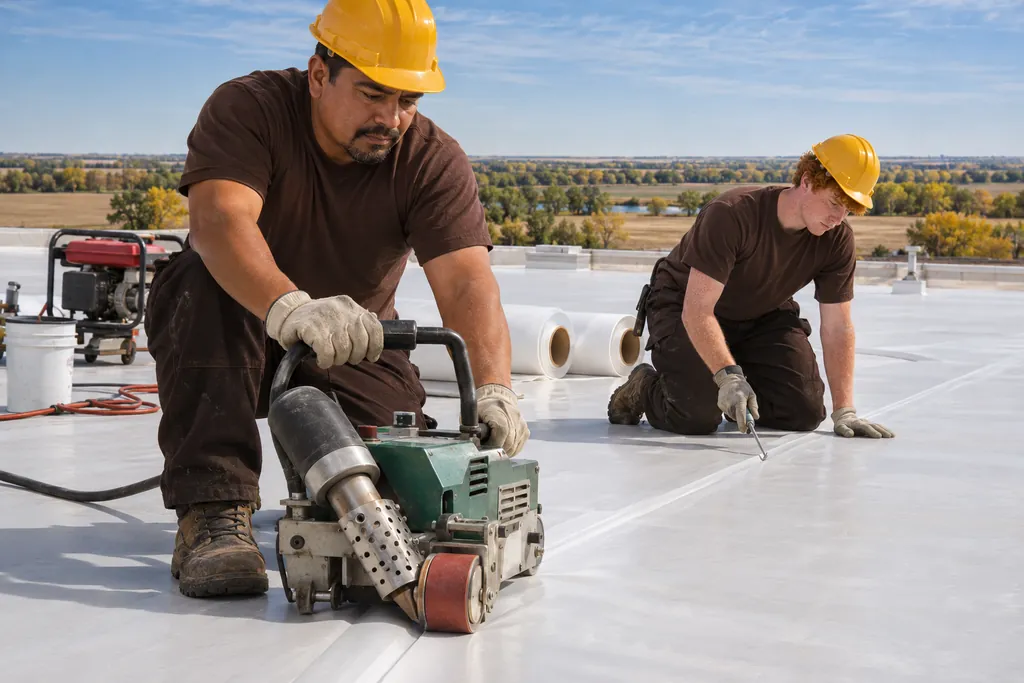
White sheet with welded laps for roofs crowded with rooftop units, where service traffic and summer heat are the bigger concerns.
TPO roofing in Kearney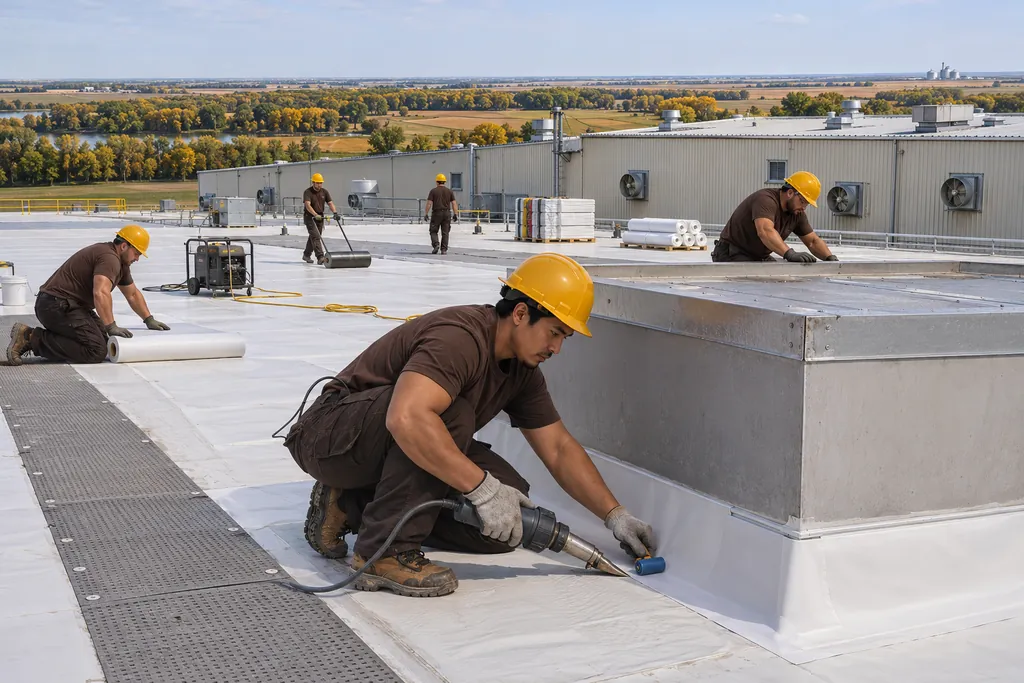
Industrial Roofing
Membranes rated for grease, oil mist, or grain dust, with crickets and raised curbs around the equipment a plant depends on.
Industrial roofing in Kearney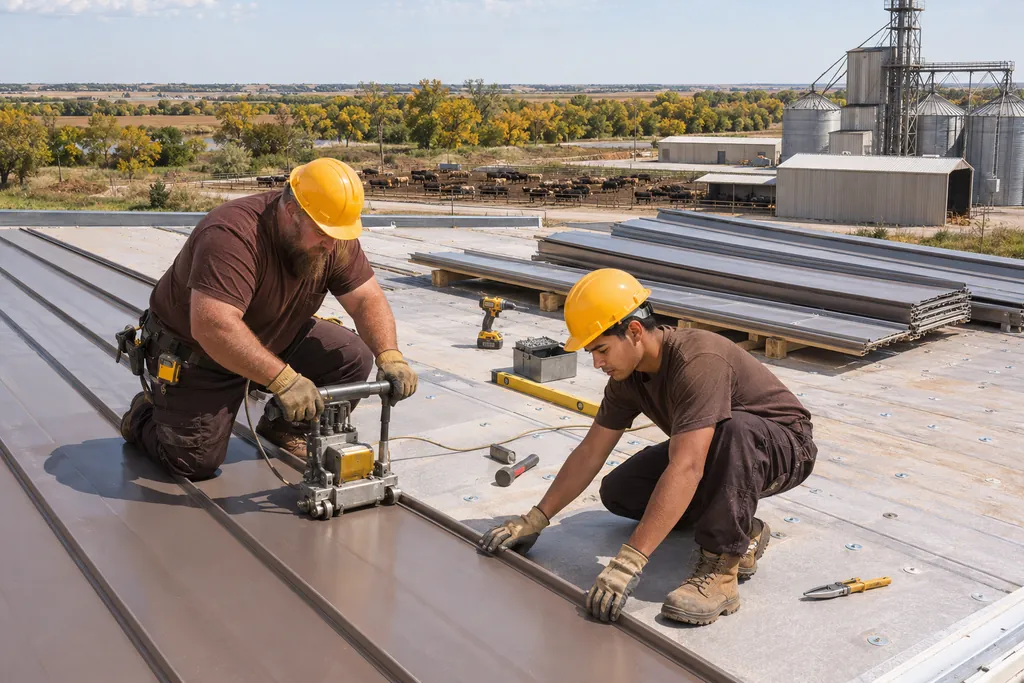
Commercial Metal Roofing
Exposed-fastener or standing-seam panels for steep roofs, and retrofit framing that turns an old flat roof into a sloped one.
Metal roofing in Kearney
Kearney EPDM Roofing Questions
Each row shows the short answer. Open it for the full one.
What is the average lifespan of an EPDM roof in Kearney?
Rated 20 to 30 years
Manufacturers commonly rate EPDM for about 20 to 30 years, depending on thickness and care. The laps, the flashing at curbs and drains, and protection from foot traffic decide where a roof lands in that range. Shrinking edges and lifting laps show up first, and catching them early keeps the sheet watertight longer.
What are common problems with EPDM roofs on Kearney buildings?
Laps and shrinkage
Laps that separate, edges pulled tight by shrinkage, and punctures from hail or dropped tools top the list. Older cemented laps fail sooner than taped ones, and flashings around pipes can split. Primer, seam tape, and peel-and-stick patches fix most of these without replacing the sheet.
Fully adhered vs ballasted EPDM: which fits my building?
Usually adhered
Adhered EPDM fits most Kearney buildings because it adds no stone weight and holds against wind across the whole field. Ballasted EPDM needs a structure rated for the stone load and a site out of high wind, since stones can scour away at corners. Adhered sheets also make leaks easier to trace.
When does an EPDM roof need replacement instead of repair?
When insulation is wet
Replacement makes sense when laps are failing across many areas, the rubber has turned brittle, or core cuts show wet insulation under a large share of the roof. A few leaks at flashings are repair work. We take enough cores to map the wet areas before recommending either.
Can EPDM be installed in cold weather?
Yes, with limits
Yes, with limits. Adhesives and primers list minimum application temperatures on their product sheets, so winter work runs on warmer afternoons or switches to fastened attachment. Taped laps go down only on dry, clean rubber, and materials stay warm in the truck until they are used.
Hire a Kearney EPDM Roofing Contractor
Tell us what the rubber roof is doing. We core it, test the laps, and quote repair or a new EPDM sheet.