
Membrane
45, 60, or 80 Mil
Single-Ply Membrane
Kearney TPO Roofing Contractor
Heat-Welded Seams Over Fresh Insulation and Cover Board
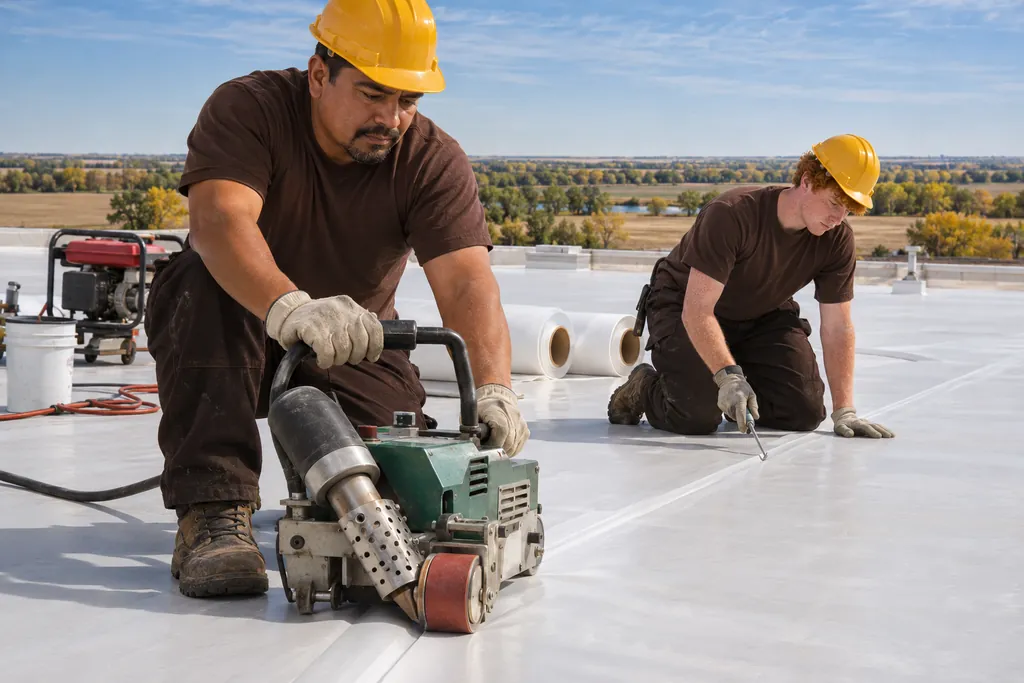
As a Kearney TPO roofing contractor, we install white TPO membrane on warehouses, offices, and retail roofs. Every seam is welded and probed before we leave.
Seams
Hot-Air Welded
- White, heat-reflective membrane
- Seams welded, then probed
- Cover board option for hail
- Tapered insulation to drains
TPO Roofing for Kearney Warehouses: Is It a Fit?
Kearney TPO roofing fits most low-slope roofs, but the deck, the drains, and rooftop traffic decide it. Here is TPO beside the two other systems we install.
What We Install
TPO
EPDM
Metal Panels
TPO Roofing Problems on Kearney Buildings
TPO roofs tell you about trouble from inside first. Each pair ties the sign to the detail up top.
- Inside The Building
Stain Under a Rooftop Unit
A ceiling stain right below an HVAC unit on a TPO roof traces to a torn sheet along the service path or a pipe boot that split at its clamp.
On The RoofWorn Membrane Along Service Paths
Technicians walk the same line to every unit, and over time the white sheet scuffs through to the scrim. We patch with welded TPO and lay walkway pads on each route.
- Inside The Building
Drips After Wind-Driven Rain
Water that appears only after storms with strong wind points to the roof edge, where gusts lift the membrane and drive rain under loose termination bars.
On The RoofEdge and Corner Uplift
Corners and perimeters take the highest wind loads. We add fasteners or adhesive in those zones and reset edge metal so the membrane stays locked down.
- Inside The Building
Ceiling Tiles That Sag Without Dripping
Tiles that sag with no visible drip mean water is soaking the insulation slowly. The source is often an old patch or a seam that opened during a cold snap.
On The RoofCold-Weather Seam Failures
Seams welded too cool or too fast can peel later. We probe every lap with a seam tool, cut test samples, and reweld any section that lifts.
Kearney TPO Roofing Details by Thickness
Thickness and attachment set how a TPO roof handles hail, foot traffic, and wind. These are the assemblies we price most.
| Option | Thickness | Attachment | Fits |
|---|---|---|---|
| Standard Field | 45 mil | Mechanically fastened | Protected roofs with light foot traffic |
| Heavier Field | 60 mil | Fastened or fully adhered | Most warehouse and retail roofs |
| Hail Assembly | 60 or 80 mil over cover board | Fully adhered | Open hail exposure or heavy service traffic |
| Recover | 60 mil over new board | Fastened through one dry old layer | Roofs where cores are dry and code allows it |
What New TPO Roofing Gives Kearney Owners
A welded TPO roof does different work for the owner, the manager, and the people inside.
Owner
- Welded seams turn the field into one continuous sheet with no glued laps at the edges.
- A white surface reflects summer sun off the deck and keeps top-floor rooms cooler.
- Small damage years later is fixed with a heat-welded TPO patch.
Facility Manager
- Walkway pads mark each path to the rooftop units and protect the membrane there.
- Probe-tested seams give you a baseline to check during spring and fall roof walks.
- Bright membrane makes punctures, debris, and ponding easy to spot from the hatch.
Tenants And Staff
- Fastened TPO goes down with little adhesive odor near air intakes.
- Sections are dried in as they go, so stock below stays covered each night.
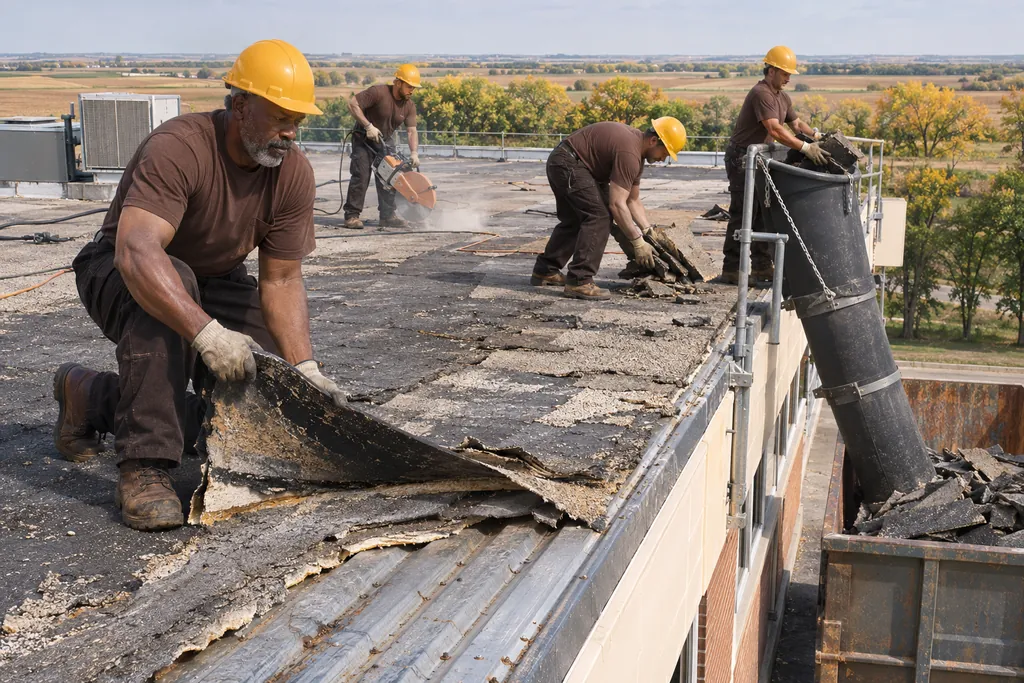
- Tear-off over each bay is scheduled ahead, then the quieter welding follows.
Seams Lifting After a Hard Freeze?
Call and tell us where the membrane is lifting or where water shows inside. We probe the seams and price the reweld or a new sheet.
TPO Roofing Steps on a Kearney Job
Four steps, split between the roof and the ground around the building.
On The Roof
Around The Building
- On The Roof
Inspect Your Roof
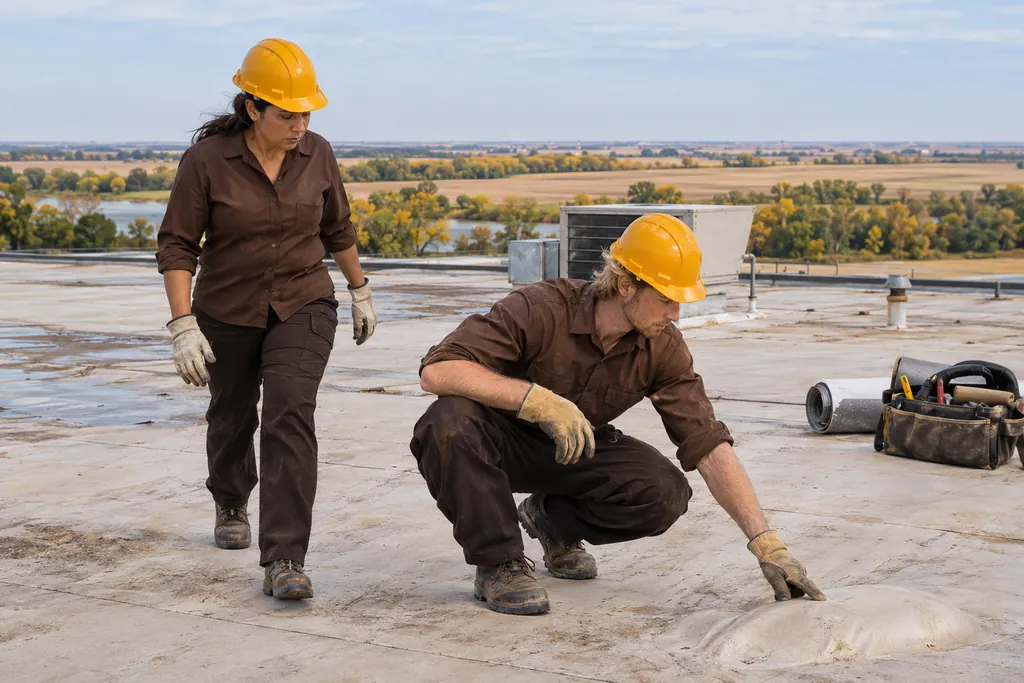
We probe existing seams, take core cuts, and check the deck for rust or rot. The cores show whether the old roof can stay as a base or has to come off.
- Around The Building
Stage the Crane and Rolls
Rolls of TPO are heavy enough to need a crane or lift. We pick a set point away from entrances and place dumpsters around your delivery schedule.
- On The Roof
TPO Seam Welding and Probing
Sheets are laid, fastened or adhered, then welded with a hot-air robot along each lap. Test welds come first each morning, and every finished seam is probed.
- Around The Building
Review the Finished Roof
You walk the new membrane with us, look at the flashing at each curb and drain, and get the system details for your records.
Other Roof Systems We Install Here
Some Kearney roofs need a different system. These three cover roofs where TPO is the wrong fit.
EPDM Roofing
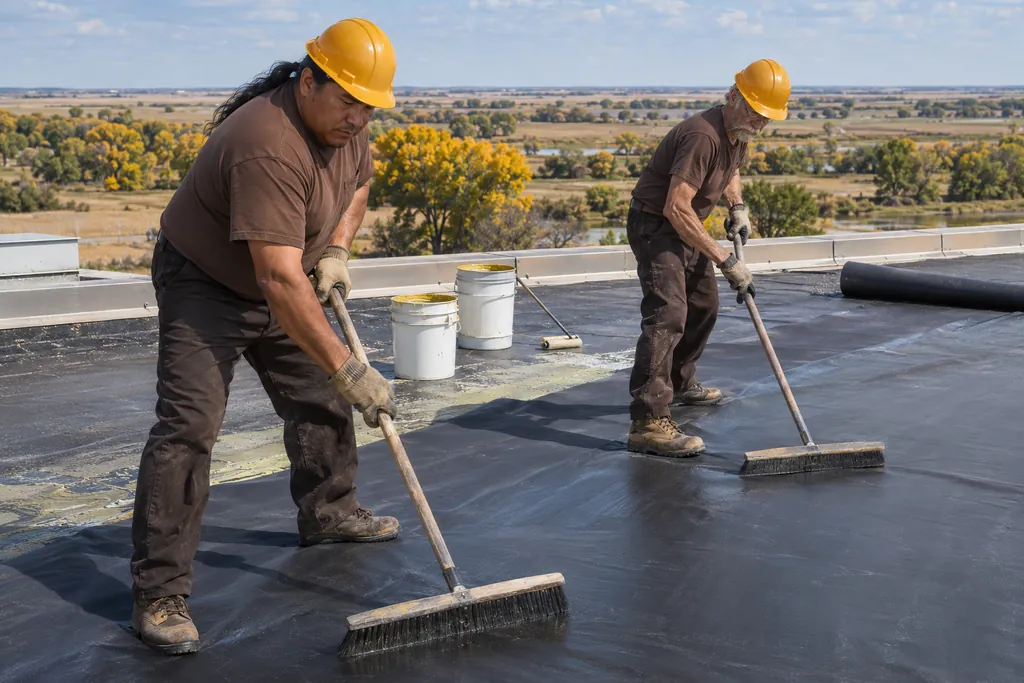
Black rubber sheet with taped laps, used where a roof has few penetrations or the deck needs a lighter, fully adhered membrane.
EPDM roofing in Kearney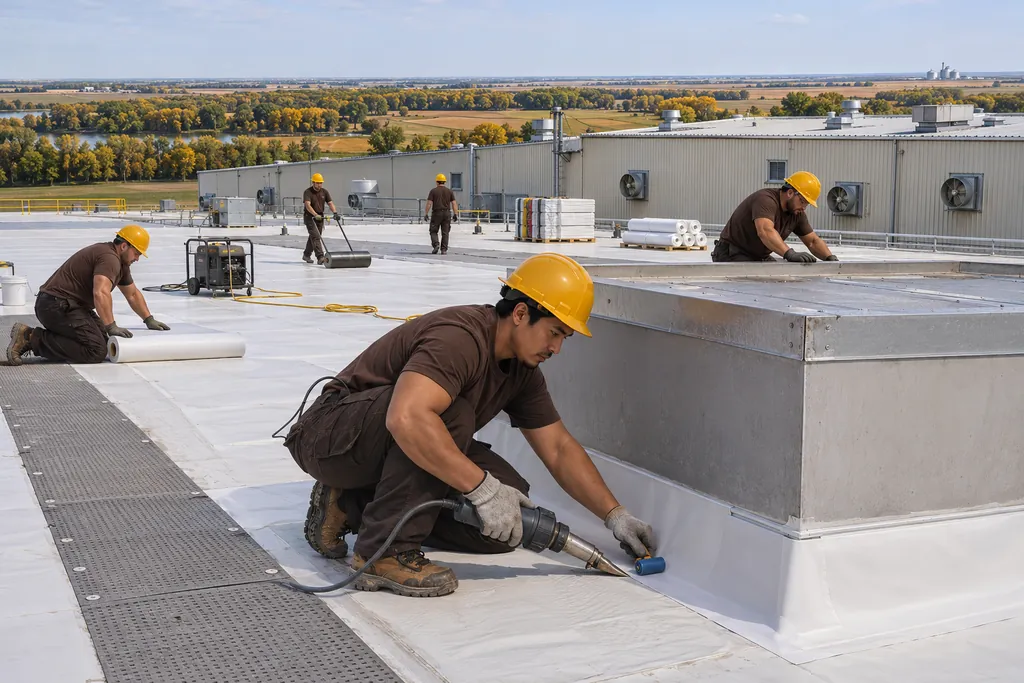
Industrial Roofing
Plant roofs with exhaust fans, oily vents, and equipment curbs need membranes rated for that exposure and protected service routes.
Industrial roofing in Kearney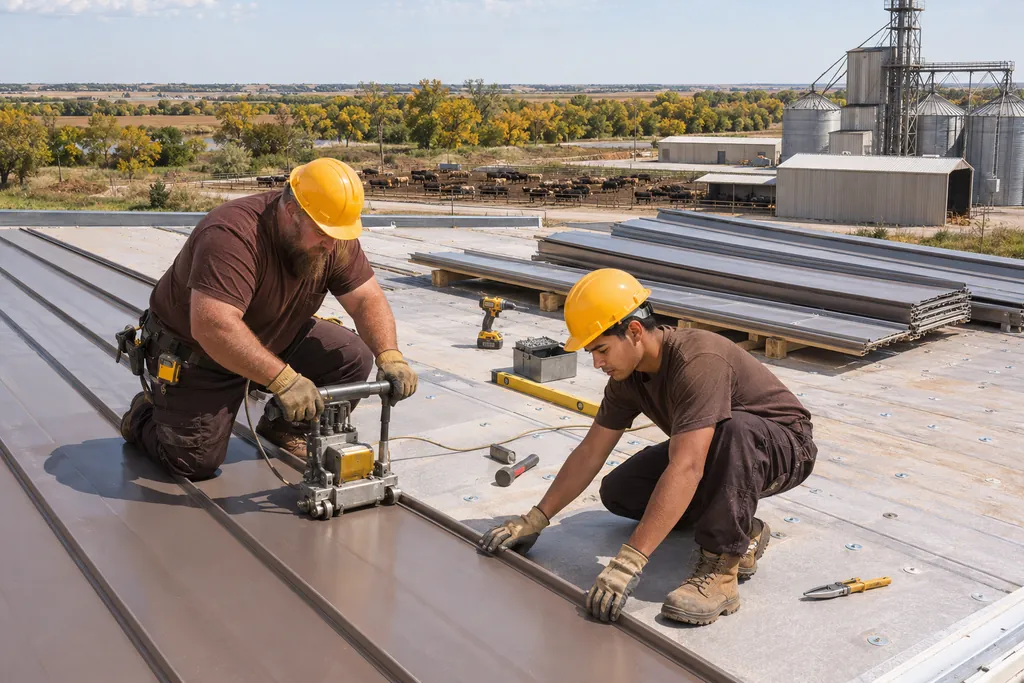
Commercial Metal Roofing
Steel panels for sloped shops and ag buildings, or retrofit framing that adds slope over a worn flat roof.
Metal roofing in Kearney
Kearney TPO Roofing Questions
Short answers first; open a row for the details.
Can a TPO roof last 30 years on a Kearney building?
Thicker sheet helps
Some come close. Thicker membranes such as 60 or 80 mil carry longer manufacturer ratings than 45 mil, and welded seams that are probed at install hold up better. Hail punctures, standing water, and foot traffic near rooftop units wear the sheet faster, so regular seam checks and quick patches stretch its life.
What are the downsides of TPO roofing in a Nebraska winter?
Cold and hail
Cold makes the sheet stiffer and easier to puncture, and large hail can crack it over hard insulation board. Quality also varies between manufacturers and formulations. A cover board, a thicker membrane, and walkway pads on service paths cut those risks on most Kearney roofs.
TPO vs EPDM: which fits a Kearney warehouse?
Depends on the roof
Both work on warehouses. TPO has welded seams and a white surface that reflects summer heat; EPDM is black, stays flexible in a freeze, and uses taped laps. Roofs crowded with curbs and service traffic lean toward welded TPO details, while plain roofs with few penetrations do well with either.
How is TPO seam welding checked on a Kearney roof?
Every lap is probed
Each seam is checked twice. The welder heat and speed are set for that morning's air temperature and wind, test strips are pulled and torn by hand before production, and every finished lap is run with a seam probe once it cools. Any spot where the probe slips in gets rewelded.
Can new TPO go over the existing roof?
Sometimes
Sometimes. A recover over one existing layer works when that layer and the insulation under it are dry and well attached, and core cuts tell us. Wet or multiple layers come off first, and the City building office confirms whether a recover needs a permit for your building.
Hire a Kearney TPO Roofing Contractor
Send the address and what you see on the roof. We core it, probe the seams, and quote the right TPO assembly.