
Buildings
Plants · Mills · Warehouses
Plant Roof Systems
Kearney Industrial Roofing Contractor
Which Roof Fits a Plant With Exhaust, Dust, and Heavy Traffic?
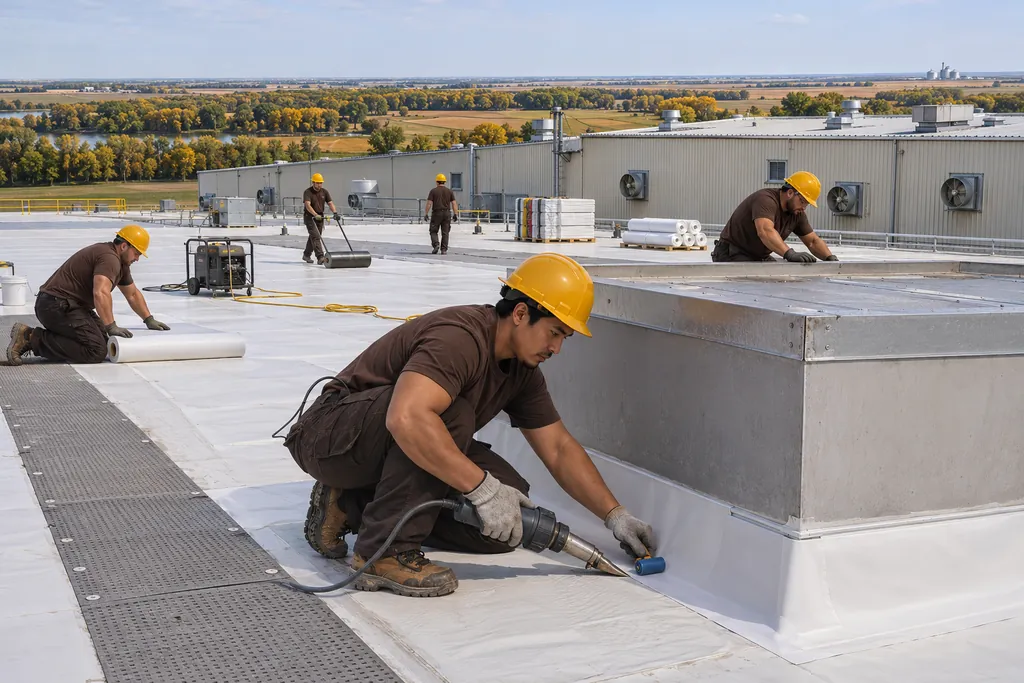
As a Kearney industrial roofing contractor, we install membrane and metal roofs on plants, feed mills, and warehouses. Work is phased so production keeps running.
Phasing
Section By Section
- Membranes rated for plant exhaust
- Walkway pads on service routes
- Phased around production lines
- Fire watch during hot work
Industrial Roofing Systems for Kearney Plants
Kearney industrial roofing starts with what the building vents, how often crews walk the roof, and how hot or cold it runs inside.
What We Install
Reinforced Membrane Assembly
Ballasted Single-Ply
Standing-Seam Metal
Industrial Roofing Problems on Kearney Plant Roofs
Plants show roof trouble in the production area first. Each pair ties that sign to the roof detail behind it.
- Inside The Building
Wet Spots Under Conveyor Penetrations
Drips along a conveyor line or under a dust collector usually come from the roof penetration above it, where boots and curbs crack from vibration.
On The RoofCracked Boots at Conveyors and Ducts
Vibration and heat cycling split rubber boots and open sealant at curbs. We rebuild the flashing with new boots, clamps, and membrane collars sized to each penetration.
- Inside The Building
Overflowing Interior Drain Lines
Overflowing interior drain lines after a storm point to roof strainers clogged with dust, grease, or debris washed off the roof.
On The RoofDrains Clogged by Dust and Grease
Dust from mills and grease from exhaust fans collect in drains and soften some membranes. We clear strainers, add oil-resistant membrane at the fans, and set cleanout routines with staff.
- Inside The Building
Leaks Near Rooftop Equipment
Leaks under rooftop units, fans, or pipe racks follow service traffic. Technicians kneel, set tools down, and drag parts across the same few feet of roof.
On The RoofWorn Membrane on Service Routes
Walkway pads, raised pipe supports, and cover board under the busiest areas stop that wear from repeating. Pipes resting on the membrane get moved onto supports.
Kearney Industrial Roofing Materials by Exposure
Plant exposures change which membrane or panel holds up. These pairings come from the vents and loads on each roof.
| Exposure | Membrane Or Panel | Extra Detail | Common Building |
|---|---|---|---|
| Grease And Oil Mist | Oil-resistant membrane grade near fans | Sacrificial pads under exhaust | Food processing, kitchens |
| Grain Dust | TPO or EPDM with sealed curbs | Drain guards and cleanouts | Feed mills, elevators |
| Heavy Service Traffic | 60 or 80 mil over cover board | Walkway pads on every route | Plants with many rooftop units |
| Process Heat | Membrane rated for heat at stacks | Raised curbs and heat shields | Dryers, ovens, boilers |
| Corrosive Vents | Coated metal or chemical-rated sheet | Stainless fasteners near vents | Wash bays, treatment rooms |
What New Industrial Roofing Gives Kearney Plants
A plant roof replacement reaches the owner, the people who maintain the building, and the crews on the floor.
Owner
- Phased dry-in lets the plant keep running while each section is replaced.
- Membranes chosen for the exposure stand up to the oils or dust your process puts on the roof.
- A written safety and access plan sets who disconnects units and when.
Facility Manager
- Walkway pads and pipe supports end repeat punctures along service routes.
- Drain guards and a cleanout schedule keep dust from backing water up.
- Each rebuilt curb flashing is noted on a roof plan for future service calls.
Tenants And Staff
- Debris chutes and dumpsters are placed away from shipping doors and break areas.
- Fire watch stays on the roof during and after heat welding.
- Interior covers go up below open sections over sensitive equipment.
Production Line Under a Leak?
Call and tell us which line or room is wet and what equipment sits above it. We trace the leak and plan the repair around your shifts.
Industrial Roofing Phases at a Kearney Plant
Industrial jobs run on a plan agreed with plant managers before the first roll goes up.
On The Roof
Around The Building
- On The Roof
Inspect Your Roof
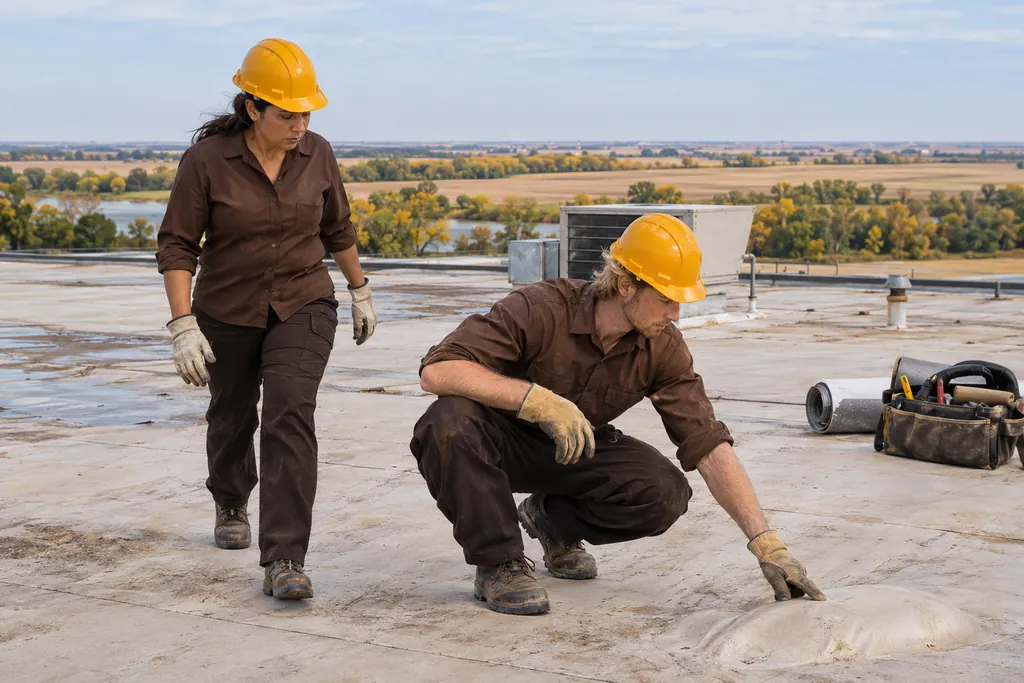
We map every curb, fan, stack, and pipe rack, core the roof in each section, and note what the vents put on the membrane.
- Around The Building
Write the Safety and Access Plan
Crane lifts, hot-work permits, fire watch, and intake shutdowns go into one written plan, reviewed with plant managers before work starts.
- On The Roof
Industrial Roof Replacement by Section
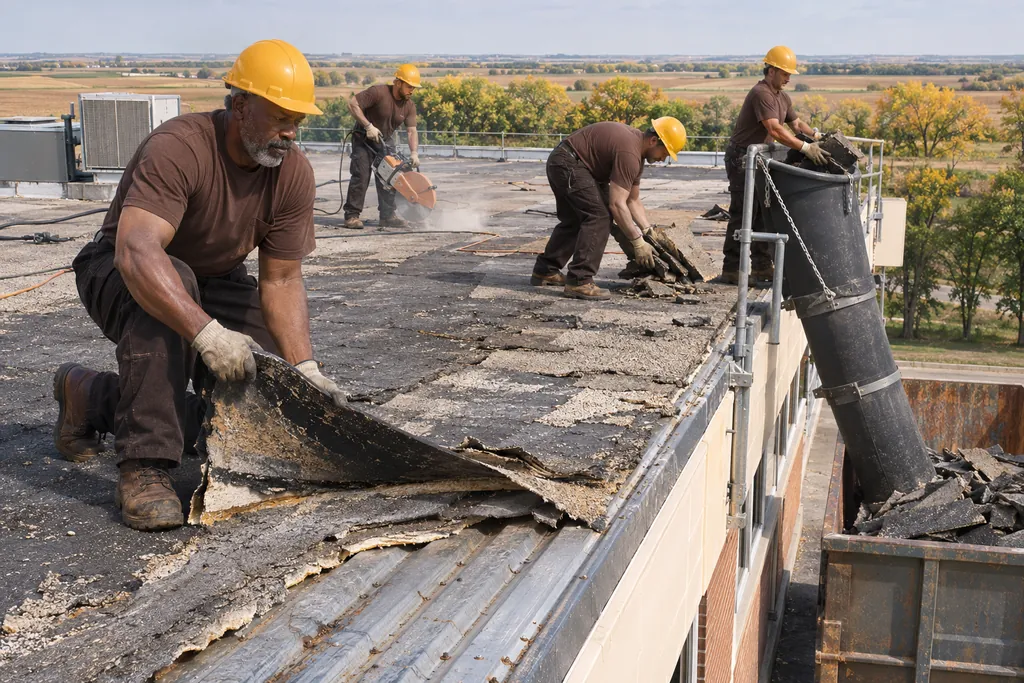
Each section is torn off, insulated, and covered with new membrane before the next opens, so the lines below stay protected through every shift.
- On The Roof
Roofing Around Rooftop Equipment
Curbs are raised to flashing height, crickets push water around units, and pipe supports sit on pads instead of the membrane.
- Around The Building
Hand Over the Roof Plan
You receive a marked roof plan showing new curbs, drains, and walkway routes for your maintenance team.
Other Roof Systems for Plant Buildings
Office wings, storage buildings, and sheds on a plant lot each get the system that fits them.
TPO Roofing
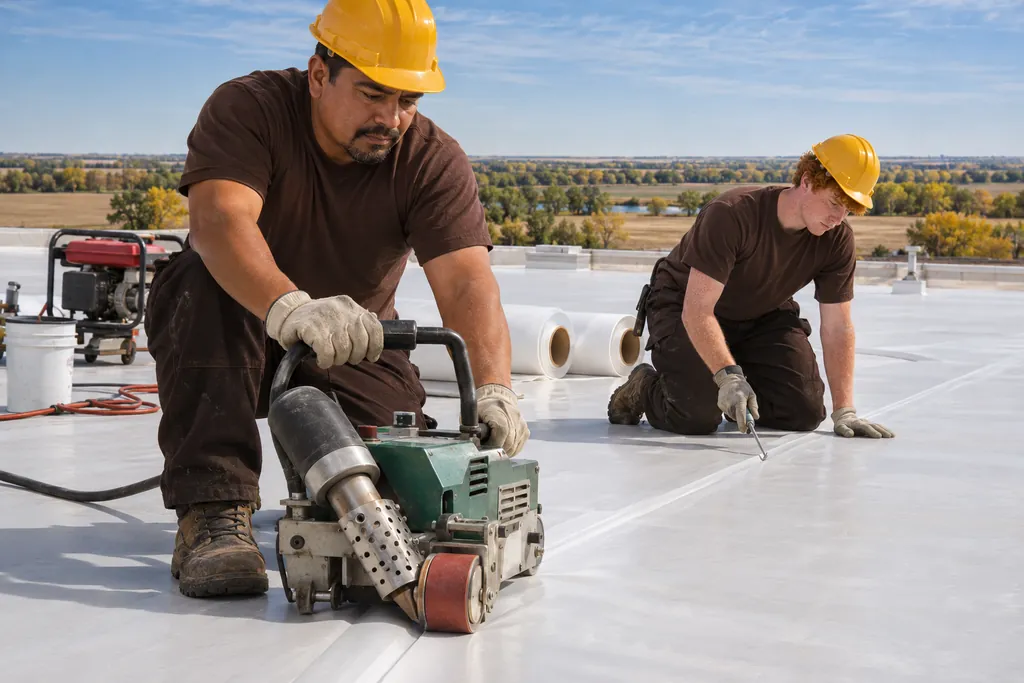
Welded TPO for office wings and warehouse roofs next to the plant, where reflectivity and tight seams matter more than chemical resistance.
TPO roofing in Kearney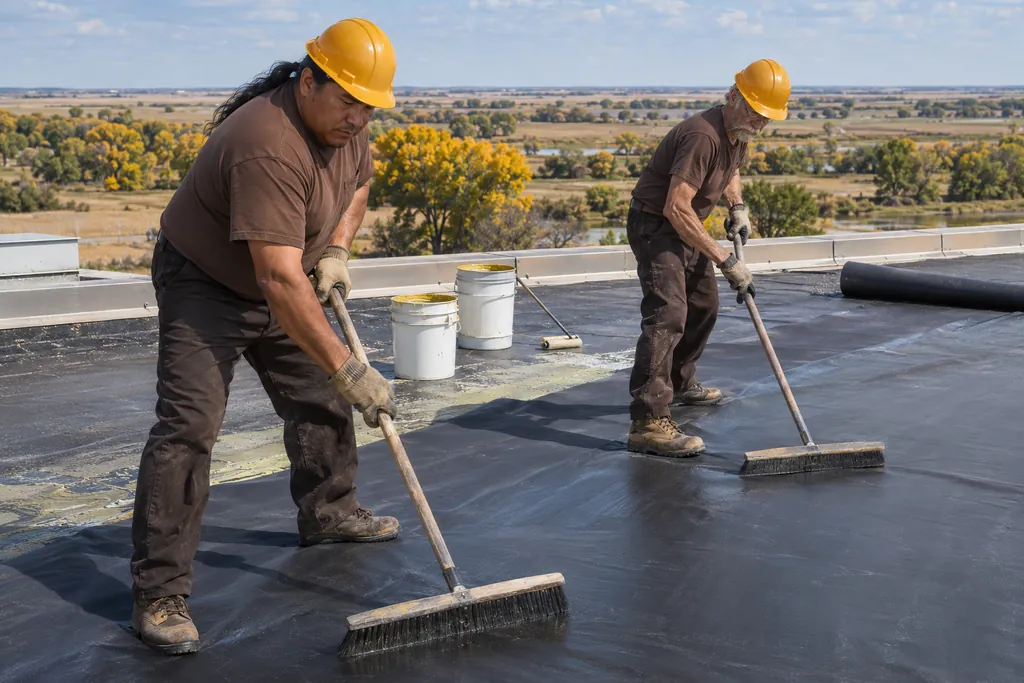
EPDM Roofing
Adhered rubber for low-slope storage buildings with few penetrations, where cold flexibility and simple lap repairs come first.
EPDM roofing in Kearney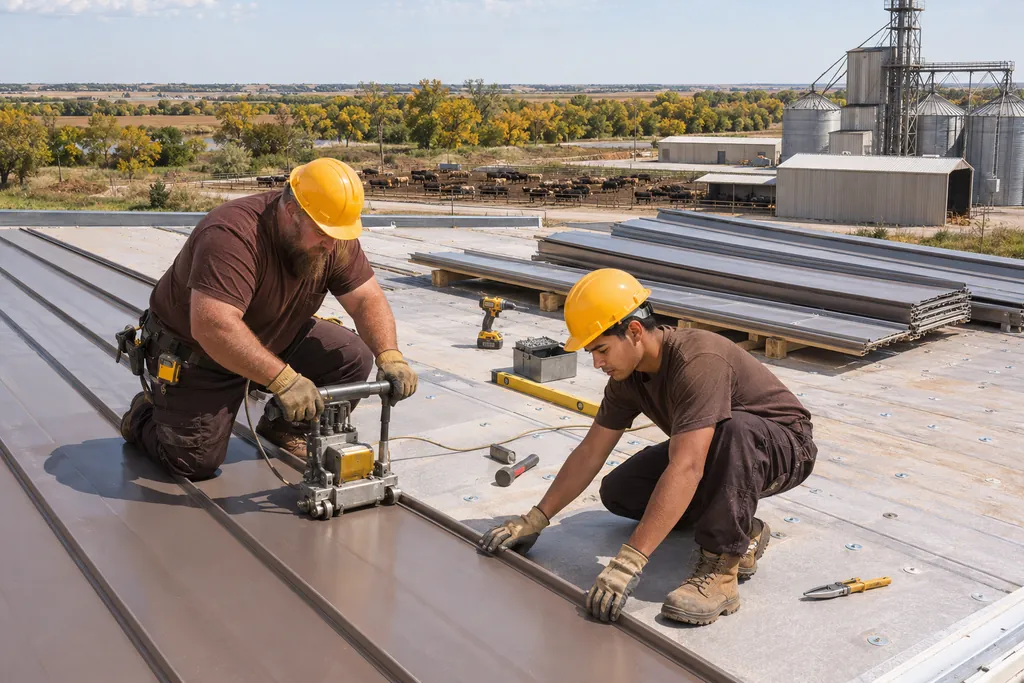
Commercial Metal Roofing
Steel panels for sloped process buildings and equipment sheds, set over retrofit framing when an old flat roof needs slope.
Metal roofing in Kearney
Kearney Industrial Roofing Questions
Short answers on each row; open one for the detail.
Which industrial roofing materials work on Kearney plants?
TPO, EPDM, or metal
TPO, EPDM, and standing-seam metal cover most plant roofs here. The deck, the building temperature, rooftop equipment, and anything the plant vents decide which one. Oils and chemicals call for a membrane rated for that exposure, and areas with heavy service traffic get walkway pads and cover board.
How is roofing handled around rooftop units and fans?
Curbs and crickets
Units sit on curbs raised to proper flashing height, with crickets on the upslope side so water flows around them. When units must be lifted or disconnected, we schedule that with your mechanical contractor. Pipe supports rest on pads, and walkway pads protect the membrane between units.
Can a Kearney plant keep running during roof replacement?
Yes, in sections
Yes. The roof is replaced one section at a time, and each section is covered before the crew leaves. Dust control, air intakes, and crane lifts are scheduled with plant managers, and interior protection goes up below sensitive equipment, so production lines stay covered for the whole project.
What should I ask industrial roofing contractors before work starts?
Phasing and safety
Ask how they will phase the roof, protect air intakes, and handle hot work. Ask about crane days, material staging, and fire watch during welding, and settle who disconnects rooftop units. Get those answers in a written safety and access plan before the first day on the roof.
How do feed mills keep grain dust from damaging the roof?
Clean and seal
Grain dust holds moisture and clogs drains, so it needs regular cleaning off the roof. Every penetration around conveyors and vents should be sealed tight. Some process oils soften certain membranes, so we pick a sheet rated for that exposure and add walkway pads along service routes.
Hire a Kearney Industrial Roofing Contractor
Tell us about the plant, the shifts, and what sits on the roof. We plan the phases and quote the assembly.